Music Commentary--Creative Writing--Cultural Hilarity


"What if there are no cries of anguish to be heard? Who is prepared to take arms against a sea of amusements? To whom do we complain, and when, and in what tone of voice, when serious discourse dissolves into giggles?"--Neil Postman


Showing posts with label record review. Show all posts

Tuesday, July 31, 2012

Mini-Record Review: Sleigh Bells, Reign of Terror


The blood-stained Keds shoes on the album cover pretty much say it all. Sleigh Bells, the duo of Alexis Krauss and Derek E. Miller, made a name for themselves a couple years ago with their loud, loud debut Treats, a record on which clipping was held up not as an unwanted byproduct of bad mixing or mastering but rather a sonic goal in and of itself. Their sophomore effort Reign of Terror is just as loud, though the ferociousness of the metal-inspired hooks (think AC/DC and Def Leppard here) is tempered with some emotionally stirring, empathetic lyrics about suicide and death.

Back to those Keds on the cover … You see, Treats was derided and/or praised by many as a “cheerleader album.” The goal was to chant simple, often anti-melodic phrases over and over again on top of crunchy power chords. I suppose you could consider Reign of Terror a “cheerleader album” as well, if your squad is chanting about really dark stuff. Personally, I find the odd juxtapositions a little disconcerting, though I guess that is the desired effect. I haven’t quite found myself in the emotional territory this record is aiming to capture. I love a good dark emo album as much as anyone (the new Cloud Nothings ventures into that territory). I liked the peppiness and the naïve superficiality of Sleigh Bells’ debut release. I’m just not sure what to feel when I’m listening to this one.

Monday, July 9, 2012

Mini-Record Review: John Talabot, fIN


Electronic dance music as a genre is maligned by some because it is, by definition, functional. The tunes are produced for the purpose of providing an outlet for people to dance. Of course, dance music throughout all of history has always been viewed with a skeptical eye by artistic purists. If a musician wants you to move to his or her tune, that doesn’t mean that the song can’t be a great work of art. To be sure, there are plenty of true artists working in dance music today. Barcelona’s John Talabot is one of them, and his debut record fIN is a fun, emotionally stimulating mixture of techno, dance-pop, and house music.


Listening to fIN, one gets the feeling of a hot summer night in a crowded city (or on a sweaty, beyond-capacity dance floor). Talabot strikes the right blend of intoxicating repetition and sonic variation. Opener “Depak Ine” is an epic journey through disco and ‘80s dance-pop. The complex layers of sound include obscure, animalistic noises. “Destiny” is the closest thing to a pop hit the record gives us, featuring simple, emotionally direct lyrics (“You, come and get over here/ And give me your hand”). The dark and brooding “El Oeste” stands alongside “Last Land,” which has a relentlessly infectious call-and-response melody. If this is Talabot’s first effort, I can’t wait to see where he goes from here. Despite the finality suggested in the record’s title, I can’t help but think this is only the beginning.

Tuesday, June 26, 2012

Mini-Record Review: Alabama Shakes, Boys & Girls


Alabama native Brittany Howard has one of the most memorable voices that has emerged recently. It’s gritty, yet irresistibly sweet, virtuosic, yet always relatable, youthful sounding, yet laced with the wears and tears of time and experience. Her range as a singer is remarkable, with her lowest registers and highest falsettos possessing equal power. Alabama Shakes has been hyped like crazy lately, and for good reason. Howard and company capture that magical Muscle Shoals sound without playing the role of mere historical reenactors. Their debut LP Boys & Girls demonstrates plenty of antiquated musical influences but at the same time expresses timeless human emotion.


On lead single, “Hold On,” Howard sings, “Didn’t think I would make it past 22 years old.” Indeed, {Boys & Girls} is to a large degree a record about survival. As the album’s title suggests, the main thematic concern here is relationships, especially of the painful, complicated variety. There’s an intriguing blend of carnality and spirituality, though. Tunes like “Hold On,” “I Found You,” and “Hang Loose” suggest a kind of mystical transcendence, a rising above all the trials and tribulations. “Goin’ to the Party” and “Heartbreaker” invoke the feeling of wallowing in the grime and grit of small-town life. No matter what Howard sings about, her voice is so commanding as to make it interesting and relevant. {Boys & Girls} is a stunning debut. If Alabama Shakes can match its vitality and energy with their next effort, it will constitute a small miracle. 

Friday, June 8, 2012

Mini-Record Review: Daniel Rossen, Silent Hour/Golden Mile


Silent Hour/Golden Mile is undoubtedly one of the most pleasant surprises of the year. I’ve never really jumped on the Grizzly Bear bandwagon. The indie darlings have been critically claimed for their airtight arrangements, intricate, yet accessible, melodies, and Daniel Rossen’s distinctive, virtuosic acoustic guitar playing. I’ve just always found them slightly ponderous and a chore to listen to at times. With his debut EP, key Grizzly Bear member Rossen has made a spiritual, uplifting record, one that is clearly a product of a man alone with his thoughts and his instrument.


Listening to Silent Hour/Golden Mile, I was reminded of a documentary about monastic life in the French Alps called Into Great Silence. That’s not to say that this EP is completely quiet, for a couple of the tracks have some richly layered textures. Rather, it exudes the kind of contemplation and inner searching associated with the lives of monks. Daniel Rossen has looked within himself and revealed many layers of meaning. Lead track “Up on High” simultaneously invokes the twangy acoustic guitars of Django Reinhardt and the electric melodicism of George Harrison. “Saint Nothing” is a beautiful piano ballad, one that sounds familiar and mystically ancient at the same time. Silent Hour/Golden Mile, although a brief statement, is the kind of record I imagine turning to for both solace and celebration. It’s the sound of a well-established artist trying to come to terms with who he really is.

Thursday, April 5, 2012

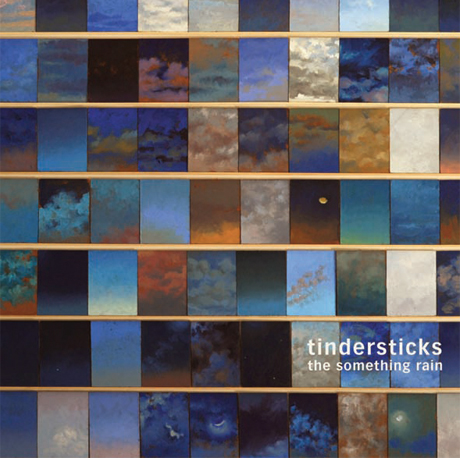
Mini-Record Review: Tindersticks, The Something Rain


The Something Rain is a beautiful, creepy, atmospheric record from a British band that really knows what they’re doing. Tindersticks has been around since 1993. Vocalist Stuart Staples and company have been leading their listeners through a labyrinth of abstract lyrics, lounge-inflected melodies, jazz-inspired grooves, and jam band-worthy song structures for years. For their ninth LP, we are treated to what might just be their most mature, enticing effort to date.


What other indie band working today could get away with starting a record with a nine-minute spoken-word tale? “Chocolate” is wildly accessible because of the enchanting guitar melodies accompanying the story and the simultaneously shocking and humorous denouncement. In fact, it’s the band’s unique sound that carries us through the whole record, as weird or as downtrodden as it sometimes gets. “Show Me” features disco-era strings, a prominent Fender Rhodes, and acoustic bass backing up Staples’ troubled, trembling vocal. “This Fire of Autumn” proves that the glockenspiel still has a place in popular music. Lead single “Medicine” is a haunting ballad featuring an intriguing sonic concoction consisting of velvety lead vocals, cello, and tremolo-laced guitar. Unlike some records that lead with the strongest tracks, The Something Rain ends with its three most engaging songs: “Frozen,” a slightly avant-garde tune of pure desire with the repeated line, “If I could just hold you, hold you;” “Come Inside,” a ballad that is so smooth you can practically feel it touching your skin; and “Goodbye Joe,” an instrumental that could have been lifted from a Quentin Tarantino soundtrack. It’s inspiring to see a band as tried and true as Tindersticks still taking risks and making beautiful art. What will they think of next?

Wednesday, April 4, 2012

Mini-Record Review: Lambchop, Mr. M


I’ll be the first to admit that Lambchop is not always an easy band to like. Frontman Kurt Wagner has been working with a rotating cast of players for the past fifteen years. While Wagner first emerged in the mid-90s as part of Nashville’s alt-country scene, he has incorporated elements of post-rock, soul, and lounge music into the mix. His vocals are full of odd ticks and his tracks are often backed by old-fashioned, almost syrupy, strings. Wagner is either admirable or maddeningly stubborn in his refusal to conform to expectations associated with the words “alt-“or “indie.” I’ve admittedly jumped on the Lambchop bandwagon rather late, since I haven’t really been familiar with the artist’s work until the past few months. The more I listen to new release Mr. M, though, the more I think it’s a mature, beautiful work of art, one that is significant outside of the context of the band’s varied oeuvre.


Wagner writes about the travails and pleasures of everyday life in a way that defamiliarizes the ordinary. “If Not I’ll Just Die” is seemingly about an awkward, tedious extended family holiday gathering; “2B2” is about the challenges of long-distance relationships. Yet, Wagner finds a way to make these ordinary subjects seem extraordinary through his poetic language. A sunset over a little country church is referred to as feeling “a lot like Little Jimmy Dickens.” The wine “tasted like sunshine in the basement.” The sky “opened up like candy.” As for the music, well, let’s just say nobody is rocking out to this record. It’s definitely the kind of thing you listen to on a quiet, dark morning or a moment of personal contemplation. At the right time, though, it sounds like one of this year’s greatest musical achievements so far.

Listen on Spotify:
http://open.spotify.com/album/5jIMNS1NP5sFkagCXvFiak

Tuesday, April 3, 2012

Mini-Record Review: Hospitality, S/T


Just when you think there’s nothing new to say about post-graduate angst, Amber Papini and her band Hospitality give us “Liberal Arts,” a song about that melancholy feeling experienced by humanities majors upon working hard to complete a degree that allows them to work for minimum wage at the local coffee shop. Papini sings, “"So you found the lock/ But not the key that college brings/ And all the trouble of your B.A. in English literature/ Instead of law, or something more practical." Hospitality could almost be viewed as a sequel to Vampire Weekend. They have made a record about what happens when the Ivy League bubble is burst and the “real world” comes crashing in. Indeed, this is material worthy of the blog Stuff White People Like or the latest Wes Anderson film. Somehow, Papini and company make this tried and true material work. The success of Hospitality’s debut LP is a testament to the power of the music, light, poppy fare that nevertheless has a bite to it.


The band is at their peak when they give us strong melodies and slightly unpredictable chord progressions. There’s definitely an element of twee in tunes like “Eighth Avenue” and “Friends of Friends,” but the sincerity of the lyrics transcends the “cuteness.” The record lags a bit when it slows down. “Julie” and “Argonauts” go on just a bit too long. Still, nothing beats pure fun, and Hospitality makes cardigan rock sound pretty sweet.

Listen on Spotify:
http://open.spotify.com/album/0CcRg0EwFcCKw99gLIcOCQ

Wednesday, November 2, 2011

Monday, October 31, 2011

Thursday, October 13, 2011

Spectrum Culture: Marketa Irglova Review

marketaanar.jpg
I'm now writing about music and books for a nifty pop culture webzine called Spectrum Culture.  My first article is a review of Marketa Irglova's new record:

Thursday, August 11, 2011

Record Review: Cults (Cults, 2011)

On the surface, Manhattan-based indie-pop duo Cults is just another in a series of bands trying to repackage any number of “cute” sounds and trite lyrics from early 1960s girl-pop groups for a new generation. All of the typical signposts are there: Phil Spector-ish, dreamy soundscapes; boy-girl lead vocals; lyrics about going out in the sun and spying on one’s secret crushes; surfboard guitar sounds; a xylophone that doubles the melody on their lead single. Listen deeper, though, and you realize that there’s something creatively creepy about this “feel-good” pop band.

The group’s darker qualities are hinted at in their name. Brian Oblivion and Madeline Follin have an odd fascination with dictators, cult leaders, and other dark figures of history. Their debut record is peppered with audio samples from speeches by the likes of Jim Jones. The Isaiah Seret-directed video for the breakthrough song “Go Outside” features images of obliviously blissful Jonestown residents singing and dancing their hearts out intercut seamlessly with footage of the band members performing the song. The film stock looks so similar that it’s impossible to distinguish between the modern and archival footage. It’s as if Oblivion and Follin have joined the People’s Temple.

The question, then, is what exactly are Cults up to with their curious juxtaposition of happy-go-lucky pop sounds and imagery from crazed charismatic cult leaders? Are they being artistically inventive, or simply exploitative?

They’re bringing a fresh, risky approach to an overworked genre. Their songs might not really be about being victims of an oppressive cult, but rather what’s it like to be in a relationship that feels restrictive. Take the opening track, “Abducted.” One could read the key lines either as a metaphor about being “swept off one’s feet” by love, or a description of an actual abduction: “I knew right then that she’d been abducted / I knew right then that I would be breaking her heart / I knew right then that I’d never love her / The reasons I hope the dream hasn’t left her scarred.” It’s this central tension that makes this ambiguous band stand apart from many of their peers. The female speaker of many of the songs uses imagery suggesting entrapment and identity frustration: “I can never heal myself enough for you”; “I’m stuck in the same tradition / I’m so tired of thinking about the things I have been missing” ; “I never saw the point in crying / ‘cause I can’t be the way you want.”

The band’s artistic intentions are perhaps best summed up by the final line of their most famous song: “I think I want to live my life and you’re just in my way.” Is the speaker talking about a lover or a fanatical cult leader? Or both? I am eerily fascinated by these questions.

Sunday, August 7, 2011

Mini-Record Review: Unknown Mortal Orchestra (Unknown Mortal Orchestra, 2011)

Portland-based Unknown Mortal Orchestra describe their own music as a “vision of junkshop collector pop.”  The Pitchfork review of the group’s debut LP compares them to Cults and Sleigh Bells.  All three groups are minimalists to some extent, although Unknown Mortal Orchestra’s sonic palette is a bit more expansive than the other two.  To be sure, this record has some engaging, pleasant moments of pop sincerity.  I smile a little bit every time the crunchy lead guitar joins in unison with Ruben Nielson’s vocal.  Indeed, the band has several clever musical tricks up its sleeve.  “How Can You Luv Me” and “Thought Ballune” in particular make for nice little summer ditties.  When I’m looking for cute, lyrically superficial, riff-based pop music, though, I prefer Sleigh Bells’ in-your-face, louder-than-thou aesthetic to Unknown Mortal Orchestra’s unassuming lo-fi stylings.  The band is rarely boring, but I’d love to see them emphasize the dirtier, more aggressive elements of their sound.  The group also describes their music as “alien beatnick pop.”  If that’s the case, these aliens are more intent on pleasant intergalactic dialogue than a full-on invasion.

Tuesday, August 2, 2011

Mini-Record Review: House of Balloons (The Weeknd, 2011)

So much music, so little time to writeNew solution: Mini-record reviews!

The most effectively atmospheric, creepily sensual R&B record of the year comes from The Weeknd, an act shrouded in a cloak of anonymity, but recently revealed to be the stage name of twenty-one year-old Toronto resident Abel Tesfaye. This debut effort evokes the feeling of a night on the town gone terribly, terribly wrong. Tesfaye’s expressive, wide-ranging voice gives me faith once again in the power of R&B. The thing that gives this album such zest, though, is the fact that Tesfaye’s soulful vocal is juxtaposed with terrifying lyrics about drug overdoses, dangerous sexual practices, and, when the night’s cloud clears, cold, relentless pain. It would be easy to accuse this record, as some have, of glorifying a relentlessly hedonistic lifestyle, if not for the fact that all the talk about the pleasures of the night are tempered by emotionally naked expressions of the agony of the morning after. House of Balloons succeeds similarly as Destroyer’s Kaputt in invoking a trippy dream state. The Weeknd’s world, though, seems more like a nightmare.

Saturday, July 2, 2011

Commentary: New Record Rundown July 2011


I’ve been spinning a lot of new records lately.  Here are my thoughts on some (fairly) recent releases:

Yuck, Yuck
Yuck, the repulsively-named, yet sonically delightful, quartet from London, have been simultaneously criticized and praised for wearing their influences on their sleeves.  There’s no doubt that they have listened extensively to Sonic Youth, Teenage Fanclub, and Pavement.  However, this band is full of too much of their own personality to be labeled as simply “90s revivalists.”  They have created one of the most fun, emotionally resonant records of the year, and one of the most promising debuts I have heard in a long while.  The lead track, “Get Away” sets the record’s overall tone, with its crunchy guitar rhythms, despondent vocal delivery style, and frustrated lyrics (“Summer sun says get out more, I need you / I want to but I can’t get this feeling off my mind”).  Tracks like “The Wall” and “Holing Out” are distinctive in their infectious rhythms and inventive melodies.  The band executes slower grooves well too.  “Suicide Policeman” and “Sunday” are Eliot Smith-worthy ballads with great emotional appeal.  The group is less successful the cuter they try to become.  Georgia,” in particular, is a bit too twee for my tastes.  However, this misstep is compensated for by “Rubber,” the album’s closing, seven-minute track.  This is the most atmospheric song on the album, one that hints at a possible future direction for this burgeoning band.  It’s a pure pleasure to get lost in the track’s droning, distorted wash of sound.  Indeed, in the words of Yuck, “I can’t get away.”         

Tyler, the Creator, Goblin


Let me begin by stating that this record is definitely not for the faint of heart. Tyler, the Creator, frontman for the L.A.-based rap collective Odd Future Wolfgang Kill Them All, is without a doubt bringing a fresh wind of creativity to the current rap scene. He and his friends create wholly original, soul-inflected beats devoid of any sampling. Tyler’s flow is full of skillful internal rhymes, unexpected wordplays, and an energetic sense of adolescent angst. These positives are often overshadowed by the rapper’s lyrics, a nightmarish collage of rape fantasies, ultraviolent imagery, and psychosexual paranoia. OFWGKTA’s upcoming appearance at Chicago’s Pitchfork Music Festival has drawn controversy on various blogs and other media outlets because of the group’s perceived homophobic and misogynistic lyrics. At the end of the day, there are no easy answers to the tensions at the heart of OFWGTA, or Tyler, the Creator’s breakthrough solo disc, for that matter. Goblin is a concept album of sorts, one in which Tyler opens up to his therapist about all of his personal and professional problems. The violent fantasies evoked on the record are just that, fantasies that reveal the speaker’s troubled inner state. Unfortunately, the disturbing lyrical content isn’t the only barrier to me unabashedly loving this album. Tyler is also often in need of an editor, as many tracks feel overly repetitive and go on much longer than they need to. However, Goblin has spawned several deeply engaging tracks, “Yonkers” and “Sandwitches” most prominent among them.

TV on the Radio, Nine Types of Light


It’s easy to take a new TV on the Radio album for granted. The Brooklyn-based band has been performing at such a consistently high level for so long that it’s not surprising when they come out with a stellar record. Nine Types of Light, the band’s fourth full-length effort, is in danger of being underrated simply because it doesn’t insist upon its greatness as loudly as the group’s previous albums. Upon first hearing Return to Cookie Mountain, the second TV on the Radio LP, I remember thinking that I was hearing something completely revolutionary. The group’s unique blend of influences from electronica, free jazz, funk, neo soul, hip-hop, and more struck a chord with countless listeners. Being hip to TV on the Radio became a kind of litmus test for indie credibility. Dear Science, the band’s third record, added more pop influences and strong, soaring melodies into the mix, rendering the most accessible TV on the Radio effort to date. It’s not entirely clear yet what Nine Types of Light has added to the TV on the Radio legacy. No tunes reach out and grab the listener with relentless energy the way tracks like “Wolf Like Me” or “Dancing Choose” have done in the past. The new album is more mellow, more subtle, and more mature than past efforts. It clearly represents a group of seasoned innovators who are confident in their creative abilities. I haven’t had the immediate, visceral reaction to Nine Types of Light that I have had to past TV on the Radio records, but it has left me wanting to come back for more.

tUnEYaRds, w h o k i l l


Sometimes it’s kind of hard to know what to make of Merrill Garbus, the New England native and current Oakland resident responsible for the musical project known as tUnEYaRds.  Her music is a strange, intriguing mix of world rhythms, a DIY aesthetic, and aggressive, post-feminist lyrical content.  While the junkyard sound and lack of traditional hooks on 2009’s Bird-Brains left some listeners cold, Garbus applies her unique sound to more conventional song structures on her sophomore effort.  The result is an endlessly fascinating record, one filled with enough contradictions and ambiguities to keep music bloggers busy for the whole year.  The sounds of acoustic ukuleles and guitars are juxtaposed with dub grooves and jazz horns.  Underlying all of the fun, musical mess is a set of lyrics about raw desire, disturbing violence, and the complexities of modern geopolitical politics.  Garbus is right when she sings, at the close of the record, “I’m so hip I cannot take it,” whether intended ironically or not.      

The Strokes, Angles


Angles, the fourth record by New York messianic figures The Strokes, has been getting undue criticism simply because it doesn’t measure up to the standards set by 2001’s masterpiece Is This It. It’s a bit like saying that Orson Welles made one of the greatest movies ever with Citizen Kane, his first effort, so his later films should be held to a ridiculously high standard. Welles’ Touch of Evil and The Lady From Shanghai, though not Citizen Kane, are perfectly good films in their own right. Similarly, Angles is a fun, albeit inconsistent, chapter in The Strokes’ history. The band finds themselves relying less on the leadership of frontman Julian Casablancas and instead making the record in a more “democratic” fashion. While many have criticized this move, it seems to me that this method has allowed the group to explore some interesting textures that have not been a part of their sound in the past. When a Strokes record opens with a reggae-inflected tune and ends with a song that could have appeared on the last Steely Dan record, you know the band has moved beyond the Velvet Undergound/Television influences they wore proudly on their sleeves on their first couple of records. By my estimation, Angles contains two pop masterpieces that deserve to be mentioned with the best tracks on This is It (“Under Cover of Darkness” and “Taken For a Fool”), four pretty good songs (“Machu Picchu,” “Two Kinds of Happiness,” “Gratisfaction,” “Life is Simple in the Moonlight”), two interesting sonic experiments (“You’re So Right” and “Games”), and two outright duds (“Call Me Back” and “Metabolism”). To me, the numbers add up to a solid effort.

Smith Westerns, Dye it Blonde


The sophomore album from Smith Westerns, a band of Chicago teenagers, is filled with such enthusiastic, unbridled joy that it is almost impossible to resist. The group captures the innocence and beautiful naivety of young love in a spirit reminiscent of early Beatles or Beach Boys songs. There are fewer than six degrees of separation between a lyric like “And when I touch you I feel happy inside / It’s such a feeling that my love I can’t hide” and “No doubt it’s you I think and dream about / And oh could it be possible for you to be with me?” The music is just as exuberant as the lyrics, with tuneful lead guitar lines bolstering the soaring, sugary main melodies. The group has also really stepped up the production values on this second record. The entire project is covered with a polished pop sheen. This record might be too syrupy for some. While it is true that a steady diet of sugar is unhealthy, who doesn’t like a sweet treat on occasion? Dye it Blonde stands in contrast to some of my other favorite, more weighty records of the year (see Radiohead’s King of Limbs, for example). As a prominent line from the album states, “Love is lovely when you’re young.”

Paul Simon, So Beautiful or So What


After about fifty years in the music business, you would think Paul Simon would run out of things to say. Indeed, many would assert that his best work is behind him, whether his legendary late 1960s collaborations with Art Garfunkel or his late 1980s forays into world music (Graceland and The Rhythm of the Saints). While some of his more recent records have felt forced and sentimental, So Beautiful or So What represents a great step forward. Simon is firing on all cylinders here, injecting his latest batch of songs with a warm dose of humanity. He’s dealing with the nature of love, God, and mortality in a non-ponderous manner, frequently injecting humor into his exploration of potentially weighty topics. The lyrics are often more stream-of-consciousness than might be expected. For example, the track “Love and Hard Times” begins with a narrative about God and Jesus paying a courtesy call on earth and ends up being a meta-love song about the nature of love songs. Simon’s occasional penchant for sentimentalism is balanced by his equal interest in realism. The opening track “Getting Ready for Christmas Day” is in danger of coming off as a maudlin holiday number until Simon includes a creative spoken-word sample from a 1940s Christmas sermon and references to the ongoing conflict in Iraq and Afghanistan. The result is an adventurous record that rarely ends up where the listener expects.

The Pains of Being Pure at Heart, Belong


Belong, the sophomore LP from New York indie-pop outfit The Pains of Being Pure at Heart, is about the often gaping chasm between the things we desire and the things we can actually have. The band’s name is aptly chosen, given that a majority of the songs on this record, as well as the group’s debut effort, deal with the utter agony of lost connections, sexual frustrations, and unrealized dreams (“And your friends don’t understand that the world could end, / And it would feel no worse than this”). At the same time, though, the album deals with finding a place of acceptance, despite the feeling of social isolation reflected in much of the record’s lyrical content. The lyrics “we just don’t belong” and “You can drive around all night with the radio on high / And wonder what it’s like to be liked” lead to the line, found on the album’s final track, “Don’t tell me that a day will come / When we dress like everyone / Cuz I can tell you’re strange like me.” The record’s title, then, reads as a virtual command to the listener: find a place to belong. This lyrical directness—the use of the 2nd person “you” is frequent—comes off as a bit simplistic at times. I could use a bit more gritty ambiguity in some of the song’s sentiments. Nevertheless, the occasional lack of lyrical bite is offset by the record’s complex sonic texture, an intriguing mix of fuzz, syrupy synth sounds, and energetic grooves. It makes the pain a bit more bearable.


My Morning Jacket, Circuital


“Victory Dance,” the first track from the new My Morning Jacket record, starts with a gong and a trumpet/vocal line that sounds like a cinematic, military bugle call. Don’t let MMJ frontman Jim James fool you, though, with all the pomp and circumstance. Circuital, the Louisville-based band’s sixth full-length record, does not represent an innovative leap forward for the band, nor is it a complete 360-degree return to the supposed glories of Z or It Still Moves. Circuital, like many My Morning Jacket releases, is a varied record. The band strikes a nice balance between Americana, psychadelia, and straight up rock n’ roll, especially on the first side. The Fender-Rhodes driven “Victory Dance” and the spacey, contemplative title track speak of childhood and the ways of yore, yet manage for the most part to avoid drippy sentimentality. I’m even with James and company on the Brian Wilsonesque confessional “Outta My System” and the soulful “Holdin On to Black Metal,” an apology for an oft-derided musical genre. My attention wanes with “You Wanna Freak Out,” an odd pairing of aggressive rhythms and soaring, tinny melody that could have been penned by the likes of Tiny Tim. The title of the penultimate track, “Slow Slow Tune,” is like a warning flag for the listener of its relentlessly mawkish quality. By the time James speaks of “moving away” in the final track, we wonder what he might be moving towards. Hopefully it’s something resembling the first half of this record, and not the second.

The Mountain Goats, All Eternals Deck


Taking inspiration from such diverse sources as 70s horror movies, death metal bands, and Hollywood stars (Charles Bronson, Judy Garland, and Liza Minnelli, specifically), indie stalwart John Darnielle brings us his latest collection of literate, immaculately constructed songs.  I use the word “song” deliberately here, since Darnielle has been acknowledged by many as one of the most talented, consistently engaging songwriters of his generation.  Listening to this record, it’s easy to see why.  Darnielle constructs impressionistic narratives out of diverse personal and pop culture fragments.  Each song has a central concept, although the record’s themes are hinted at more than explicitly stated.  Oblique imagery coexists with lines of intense emotional bluntness, like “felt your name burning like a tattoo in my skin” and “anyone here mentions ‘Hotel California’ dies before the first line clears his throat.”  Some of Darnielle’s long-term fans have been disgruntled with The Mountain Goats’ recent heightened production value.  Darnielle has gone from recording scratchy demos on vintage low-fi boom boxes to recording in an actual studio with an actual producer.  In my view, though, the results are splendid.  Darnielle’s trio plays with impeccable taste, supporting rather than overpowering the songwriter’s inventive lyrics and caustic vocal.     

Iron & Wine, Kiss Each Other Clean


There’s one thing I’ll say for Sam Beam, the singer-songwriter known by the stage name of Iron & Wine: he’s not content to stand still as an artist. Whereas his earliest records like The Creek Drank the Cradle and Our Endless Numbered Days established Beam as a prominent indie folk musician, the latest record finds him experimenting with a more synth-driven sound. Beam has supplemented his normally modest band with saxophones, pan flutes, and atmospheric keyboards. The result is an inconsistent, yet often engaging record. Whereas the music on this album sounds more adult-contemporary, the lyrics have clearly been inspired by early Bob Dylan songs. Tracks such as “Walking Far From Home” and “Your Fake Name is Good Enough For Me” feature a cataloguing technique, juxtaposing striking, and often contradictory, images with one another. The most obvious earlier analogue for such a strategy is Bob Dylan’s “A Hard Rain’s a Gonna Fall.” While this “list poem” strategy is intriguing at first, it becomes a bit tedious by the end. While it might be tempting to long for the days when Beam’s primary focus was weaving complex personal narratives in his songs, it has become clear that no work he ever produces can be accused of being uninteresting.

The Head and the Heart, The Head and the Heart


The Head and the Heart, a folksy Seattle-based group, self-released their eponymous debut record in 2010.  After much Internet success, Sub Pop re-released a remastered version of the same album in April of this year.  Listening to this record is a simultaneously pleasurable and frustrating experience.  On one hand, the band clearly has great potential, mixing its Americana roots with a keyboard-driven pop sensibility.  It’s kind of folk music for people who don’t like folk music.  The result, though, is that they sometimes aim for the lowest common denominator in their audience.  The group is especially trite lyrically, with such lines as “my family lives in a different state.  If you don’t know what to make of it, then we will not relate” and “darling, please come home.  I’ve cleared out the fridge, wiped the counters off, and put away my clothes.”  The album’s best tracks, though, like “Cats and Dogs” and “Coeur D’ Alene” are harbingers of the magic to come if the band’s songwriting chops catch up to their pleasant, distinctive sound.

The Go! Team, Rolling Blackouts


If ever there has existed a band whose perceived quality on my part is directly proportional to my mood at a given moment in time, it would be The Go! Team. I have always found their music either blissfully joyful or maddeningly overblown, depending on the context in which I am listening. Rolling Blackouts, the group’s third full-length effort, is no exception to this rule. While they have done much to expand their sound, including a greater focus on 60s girl-group pop music, the staples of their sonic texture remain garage rock, blaxploitation soundtracks, cartoon music, and marching band arrangements. Their new record isn’t likely to convert nonbelievers. If this odd witches brew of low-fi sounds seems like a good idea to you, chances are you’ll find infinite joy in this latest effort. If it sounds contrived and artificial—which it arguably is—you’ll probably want to avoid this album like the plague. The lyrics here are as banal as ever, with severe weather and casual relationships forming the songs’ main plot points, but a song like “Ready To Go Steady,” with its Phil Spector-inspired drum fills and pencil-thin lead vocal, almost makes me, an avid sand-hater, want to go to the beech and blare this music through a cheesy boombox picked up at a vintage pawn shop. If this sounds at all appealing, you should probably check out Rolling Blackouts.

Fleet Foxes, Helplessness Blues


The Seattle-based indie folk sensation’s sophomore effort is even more subtle, ambitious, and emotionally resonant than their 2008 debut. Helplessness Blues evokes that strange moment in young adulthood when one realizes one is far from childhood, yet equally far from what one ultimately wishes to become. The record’s contemplative, personal lyrics speak of standing before the realities of life with simultaneous astonishment and uncertainty (“And now after some thinking / I’d say I’d rather be / A functioning cog in some great machinery, serving something beyond me. / But I don’t know what that will be! / I’ll get back to you someday soon you’ll see … If I know only one thing, it’s that everything that I see of the world outside is so inconceivable often I barely can speak”). The emotional nakedness of lyrics such as these is matched by other lines that are much more abstract and impressionistic. Musically, the band is expanding their sonic concept far beyond what they have done in the past, experimenting with a more complex texture (including avant-garde jazz horns on one song), multi-movement structures, and warmer harmony vocals. Helplessness Blues is undoubtedly one of the highlights of the year thus far.

The Dodos, No Color


There’s a beautifully subtle moment about halfway through “Black Night,” the opening track from the San Francisco indie band The Dodos’ latest record, in which the song’s rhythmic base shifts substantially. For the first half of the tune, the percussion part consists simply of two repeated syncopated eighth notes. During the second half, drummer Logan Kroeber adds a sixteenth-note, machine gun-like accent on the rim of the snare drum. The result sounds nothing like the rhythm of any rock song in recent memory. Such are the charms of The Dodos. Nobody else sounds exactly like them, and there’s not a conventional pop song to be heard on No Color. The group’s often melancholy lyrics are accompanied by music full of such vitality that it is nearly impossible not to smile wildly even as vocalist Meric Long sings such lines as “this ship is going under.” The Dodos are one of the few bands in indie rock who have become well-known primarily for their unique musical technique. Meric Long’s fingernail-pick acoustic guitar style and Kroeber’s drum set sans kick drum and frequent use of complex rim shot patterns bring a fresh and distinctive sound to the group. These innovations would all be moot, though, if it weren’t for the band’s supreme songwriting chops. Having Neko Case contribute some guest vocals doesn’t hurt either.

Destroyer, Kaputt

I have had a love-hate relationship with Daniel Bejar in the past. While I’ve always enjoyed his contributions to the super-group The New Pornographers, I’ve found his work with Destroyer inconsistent. His cryptic lyrics alternate between intriguing and maddeningly pretentious. I’ve connected with various songs from the Destroyer back catalogue, but until now I’ve never been able to fully get behind an entire Destroyer album. Kaputt, though, seems like a fulfillment of the ambitions Bejar has been hinting at his whole career. It is decidedly one of the year’s most atmospheric records. To say that Destroyer has been influenced heavily by 70s adult-contemporary pop is perhaps a backhanded compliment. Bejar, though, brings integrity to this music. With its complex chord structures, jazz-inflected horn lines, and sleepy keyboards and electric guitars, Kaputt establishes a dreamy mood and sticks with it for the whole record. It feels like we’re listening to the fog descend upon San Francisco or a light rain fall upon Seattle. While it would be tempting to call Kaputt the best Steely Dan record in years, Bejar brings a sincerity and maturity to the album’s lyrics. The sense of irony inherent in most of the Dan’s music, as well as many past Destroyer releases, is reigned in considerably. While Bejar still incorporates a plethora of musical and lyrical references, there is a newfound sincerity to much of his verse. Many of the songs deal with the destructive conclusions of hedonism. A line from the title track sums it all up: “Wasting your days / Chasing some girls alright. / Chasing cocaine / Through the backrooms of the world alright.” It all sounds like a dream to me.

Company of Thieves, Running From a Gamble


Company of Thieves, a rock band from Chicago, is one of modern indie music’s most well-hidden secret weapons. Specifically, frontwoman Genevieve Schatz has one of the most resonant, powerful voices that most have never heard. The group’s 2009 debut Ordinary Riches was equally accessible and adventurous, combining complex, jazz-inflected chord progressions with confessional lyrics and big melodies. The band’s sophomore effort rocks a little harder and is more blues-inflected than the first. Much of the record’s bluesy sound comes at the hands of keyboardist Mike Maimone, who employs the organ sound to great effect, especially on the slow-burning “Nothing’s in the Flowers.” If the rhythms and melodies are a bit more predictable this time around, Genevieve’s voice proves itself a more powerful instrument than ever, from the sultry subtlety of “Never Come Back” to the all-out wailing of “Modern Waste.” The band also continues to show great growth in their songwriting abilities. The record’s lead “single,” is called “Death of Communication” for a reason. Most of the songs are about the complexities and frailties of human relationships. Genevieve, the group’s sole lyricist, channels Liz Phair at her brightest when she expresses the frustrations (“I will paint your picture and post it in the street / And you can best believe / I’ll kill you like I want to / I will bury you in deep”) and surprises (“We struggle and we fight ‘cause it feels good to wonder why our lives are happening”) of love. The record is called Running From a Gamble because the lyrics deal openly with the random, unpredictable nature of pleasure and contentment. This band deserves to be more widely heard.

Bright Eyes, The People’s Key


Conor Oberst, frontman for the band Bright Eyes, has been both celebrated as a Dylanesque indie-folk prophet and vilified as a pretentious, politically simplistic poseur. Proponents of either classification could probably make a case for their side from listening to The People’s Key. At times, Oberst’s lyrics strike a remarkable balance of accessibility and philosophical curiosity (“Shell Games” and “Ladder Song” foremost among the album’s tracks). On the other hand, Oberst begins the record with a meandering, overly-long monologue by Texas musician Denny Brewer about the origin of humanity/possibility of extraterrestrial life/other pseudo-intellectual New Ageisms. Oberst’s decision to place this 2.5 minute sermon at the front of an otherwise superb track (“Firewall”) is simultaneously bold and annoying. Musically, Oberst is moving far from his acoustical, folky roots freely flaunted on 2005’s I’m Wide Awake, It’s Morning. His dabbling with sci-fi-inspired electronica renders the often personal lyrics more distant and generic than they would otherwise be. Still, a quick scanning of the lyric sheet shows that Oberst has grown over time as a poet. Whether reflecting on the nature of human existence (“If it’s true what we’re made of, why do I hide in the rain?”) or the realities of death (“You’re not alone in anything / You’re not unique in dying), it’s clear that Oberst still has plenty to say.

The Antlers, Burst Apart


Burst Apart, the latest record from the Brooklyn-based band The Antlers, is a perfect embodiment of the principle that melodies, musical textures, and rhythms can reinforce the themes being explored in a set of lyrics. I listened to Burst Apart six or seven times without really giving the words much consideration. When I eventually perused the lyric sheet, I found that frontman Peter Silberman was writing in the key of melancholia, exploring such themes as trepidation about intimacy, the failure of communication in relationships, and the realization of death’s inevitability. These grim topics are reflected in the unique sound The Antlers capture on this record. The falsetto vocals, mechanical rhythms, high-pitched synth pads, and minor-key modalities sound like a soundtrack for the moment on one’s death bed when the realities of one’s nonexistence fully sink in. If Ingmar Bergman were making films like Cries and Whispers today, he could very well hire The Antlers to compose the score. Most of the songs have a consistent, repetitive rhythm bolstering the persistent questions and existential concerns that come up on the album. For example, the speaker on “No Widows” states that “If I never get back home, / There’s no garden overgrown / No widows in the walls, / No widows left alone.” The speaker works through all the implications of his potential death, returning repeatedly to the notion that there would be “no widows” left to mourn his passing away. Burst Apart is to me the antithesis of a summer record, but it addresses questions we all must face eventually with depth of musicality and lyricism.

Alison Krauss and Union Station, Paper Airplane


After more than twenty years in the business, Alison Krauss remains one of the most respected, consistently engaging artists in acoustic music. Paper Airplane, Krauss’ first record with bandmates Union Station since 2004, is largely devoid of influence from 2007’s Raising Sand, the blues/rock-injected piece of quirky Americana with Robert Plant. Krauss and company are back to their old tricks, presenting lyrics about broken relationships, dreams deferred, and the stoical acceptance of death against a virtuosic, yet mostly understated, musical background. The work of dobro legend Jerry Douglas is particularly staggering in its subtlety of tones and textures. Dan Tyminski, known as the musical voice of George Clooney in O Brother, Where Art Thou, brings not only his gruff, in-your-face lead voice, but also his softer, gentler harmony vocal abilities. The album contains a variety of cover tunes, including a mournfully slow version of Richard Thompson’s “The Dimming of the Day” and a spirited rendition of Peter Rowan’s “Dustbowl Children,” the most interesting track on the record. It’s hard to say exactly where this effort falls in Krauss’ prolific canon. The band is as technically brilliant as ever, though some songs perhaps lack the emotional immediacy of earlier recordings. There’s no doubt, though, that Paper Airplanes is one of the year’s most enjoyable country-bluegrass-acoustic records.

Abigail Washburn, City of Refuge


The fact that Abigail Washburn married banjo legend Bela Fleck in 2009 seems musically apropos. Fleck and Washburn have in common the fact that they represent the future and the past of the banjo in American music. Whereas Fleck has been most innovative in the way he has brought jazz and world music influences into his bluegrass-based playing, Washburn’s innovations are all about sound. On City of Refuge, her second solo effort, she sets her fairly traditional claw hammer style against a sea of sounds from Americana and around the world. We hear echoes of chamber orchestras, mariachi bands, and East Asian strings throughout the record. Tucker Martine, who has worked with such indie groups as The Decemberists, Spoon, and Sufjan Stevens, produces the record and is undoubtedly responsible for some of the disc’s sonic eclecticism. Washburn’s album is successful, though, because her songwriting, including collaboration with Nashville songwriter Kai Welch, is often as interesting as the unique sounds underpinning the songs. Washburn sings of heartache, spiritual enlightenment, and finding a refuge amongst a sea of troubles. Washburn was born on Chicago’s north shore, lived for a while in China, and has studiously taken in many folk traditions, including those of America’s Appalachia. City of Refuge is thematically a record about being “betwixt and between,” whether it be straddling cultures, relationships, or emotional states. This is a topic Washburn clearly knows something about.


Monday, June 20, 2011

Record Review: Bon Iver (Bon Iver, 2011)

Justin Vernon’s 2007 masterpiece For Emma, Forever Ago was famously recorded in a Wisconsin hunting cabin following a series of unfortunate losses and taxing life circumstances. The music was sonically sparse, quiet, personal, and inward-looking. For Vernon’s sophomore effort, it seems the artist has come out of the cabin. If the first Bon Iver LP was about un-stacking your load, coping with the losses and inevitable setbacks life brings, the second full-length record seems to be about starting anew. “Perth,” the eponymous record’s opening track, concludes with the lyric “you’re breaking your ground.” This line accurately describes the artistic project Vernon undertakes on Bon Iver, Bon Iver. Indeed, he is breaking new ground both musically and lyrically.

Whereas the dominant sounds on For Emma were acoustic guitars and falsetto vocals, Vernon’s sonic palette has expanded exponentially on this sophomore effort. Bass saxophones, French horns, steel guitars, banjos, distorted electric guitars, muted trumpets, Flamenco-influenced acoustic guitars, 80s Korg keyboards, xylophones, and military-sounding drums all serve as key ingredients in Bon Iver’s musical stew. Rather than sounding gimmicky or contrived, though, these textures suggest a world of their own, one that matches Vernon’s oblique, impressionistic lyrics.

Justin Vernon has been justifiably praised as one of the most significant songwriters of his generation largely because of his use of wordplay, poetic imagery, and ability to highlight the natural beauty of language. While Bon Iver songs have never been particularly known for their transparency, the For Emma tunes had a highly personal, introspective quality. Songs like “Skinny Love” and “Re: Stacks” served as narratives of the speaker’s internal life. The strong emotions expressed in these tracks were ambiguous, yet highly accessible to the listener. The lyrics from Bon Iver, Bon Iver, on the other hand, hint at personal themes rather than stating them explicitly. The songs’ geographically-based titles give us the impression that the songwriter is depicting specific events in precise locations. The actual lyrical content, though, often serves as more of a collage of people, incidents, and feelings that come together around some hard-to-define thematic concept. Many of the songs seem to be about transformative experiences, moments in which one comes to unique realizations about one’s self. These instances depicted on the album seem to revolve around friends, lovers, and family. Such epiphanies are reflected in lines like “still alive who you love,” “and at once I knew I was not magnificent,” “I could see for miles and miles,” “love can hardly leave the room with your heart,” “I was only for to die beside,” and “I ain’t living in the dark no more.” Lyrics such as these provide a solid grounding for his often abstract, yet always beautiful, poetry.

It is appropriate that the record depicts powerful incidents in one’s life, since the album is successful largely because of the memorable moments it creates, from the way the acoustic guitar, pedal steel, and xylophone harmonize at the opening of “Holocene” to the gentle depiction of sexual awakening in “Michicant.” All of the album’s divergent qualities come together in “Calgary,” a breathtakingly subtle and nuanced track near the end of the record. The song’s natural ebb and flow match its nautically-inflected lyrics (“so it’s storming on the lake”; “wake up to your starboard bride”; etc.). Vernon saves the most controversial song, though, for the very end. The final track, “Beth/Rest” has generated much discussion on the blogs, since it is a rather unabashed tribute to Bruce Hornsby and other perpetrators of 80s, keyboard-driven, adult-contemporary pop. While this song will undoubtedly be the hardest for the indie-centric portion of Bon Iver’s audience to embrace, it has been rescued from cheesiness for me after repeated listens. Although Vernon uses the ubiquitous Korg keyboard for this song’s sonic base, unique, subtle sounds are layered on top, including the pedal steel, atmospheric soprano saxophone, and some ghoul-haunted synthesizers. While it’s still the weak link in an otherwise virtually flawless record, its texture is anything but hackneyed. Surprisingly, one can see why Vernon would end the record with “Beth/Rest.” The album’s penultimate line is “danger has been stole away.” Lyrically, there’s a sense of contentment and acceptance. Vernon, having grown up with the music of the 80s and 90s, would naturally gravitate towards these sounds to express familiarity and “settling.”

The audacity and complete lack of concern about “indie cred” reflected in this final track bodes well for Bon Iver as an artist. Despite the fact that Vernon is now more in the spotlight than ever, given his crucial role on Kanye West’s 2010 blockbuster My Beautiful Dark Twisted Fantasy, he has made the record he wanted to make with relentless energy and passion. Bon Iver, Bon Iver is the year’s most ambiguously challenging, viscerally moving, sonically intriguing, musical work so far.

Monday, January 17, 2011

Record Review: The King is Dead (The Decemberists, 2011)

After the prog, epic ambition of 2006’s The Crane Wife and 2009’s The Hazards of Love, The Decemberists have given us a quiet, humble, perfectly pleasant country-folk-rock record with The King is Dead. Whereas the obvious influences on the previous two albums include the likes of Emerson Lake & Palmer, Jethro Tull, and Shirley Collins, the latest effort is more in debt to Neil Young, early R.E.M., and various alt-country acts of the past fifteen years.

This time around, the Portland based band concern themselves less with presenting a sprawling conceptual narrative over the course of several suite-like songs than crafting ten simple tracks that work effectively on their own as well as together. While The Decemberists still explore themes of mortality, nature, and the fragility of human relationships, the songs are not as thematically unified as on the previous couple efforts.

The crunchy, metal-influenced guitars and blues-based organs of The Hazards of Love are replaced with raw acoustic guitars, rustic fiddles, and steel guitars. Guests like Gillian Welch and Peter Buck help fill out the band’s sonic emersion in all forms of Americana. Tracks like “Calamity Song” feature a twangy, resonant guitar sound reminiscent of The Byrds. “Rise to Me,” with its combination of harmonica and pedal steel, would be right at home on a Neil Young & Crazy Horse record from the early ‘70s.

The biggest weak spot on The King is Dead is undoubtedly the preciousness of some of the lyrics. While Colin Meloy’s obsession with mythology, antiquated language, and esoteric literary and cultural references has always bordered on annoying, this time it’s the emotional directness of some of the lines that I find bothersome. I can’t quite go there with Meloy when, on “June Hymn,” he sings: “A barony of ivy in the trees / Expanding out its empire by degrees / And all the branches burst to bloom / Heaven sent this cardinal maroon / To decorate our living room.” Unfortunately, the lack of lyrical depth is accentuated by the record’s sparse musical texture.

In my mind, The King is Dead is a record from a band in transition. The most recent analogue I can think of is probably Wilco’s Sky Blue Sky. Coming after the relentless ambition and innovation of Yankee Hotel Foxtrot and A Ghost is Born, Sky Blue Sky was an album of quiet, comfortable domesticity. I can’t imagine coming back to A King is Dead as much as The Decemberists’ previous two efforts. Nevertheless, in the austere musical winter of January, The King is Dead is a happy diversion.